Unique Carmel Architecture
For more than a century, the Bohemian vibe of tiny Carmel-by-the-Sea has attracted an outsized number of artists of all genres: painters, sculptors, writers, poets, actors and musicians. But one group of artists is perhaps not as celebrated but has left an indelible mark on this village's cultural landscape. Carmel's architecture is as diverse and charming as its many other attractions.
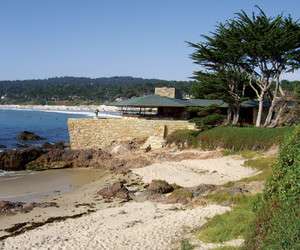
A casual stroll through the streets of Carmel rewards the architecture aficionado with an encyclopedic array of building styles, from the whimsical Hobbit-house-like cottages of early designer/builder Hugh Comstock—such as the "Hansel and Gretel" cottages that he built to showcase his wife's doll collection—to imposing river stone monoliths such as poet Robinson Jeffers' Tor House—much of which he crafted with his own hands from stones from the nearby beach—to ultra-modern glass and steel edifices. Even the most famous 20th century architect Frank Lloyd Wright left his imprint on Carmel with his Della Walker House at the south end of Carmel Beach.
Carmel-by-the-Sea's commercial buildings have interesting design aesthetics and thanks to thoughtful city planning, most have survived. On Ocean Avenue, the building at the corner of Mission was originally the home of the Carmel Dairy. Take in the view from across the street and it becomes clear that its tower is rendered in the shape of a milk bottle. The Art Moderne façade of the shop at Dolores with its bas relief sculptures by Carmel artist Paul Whitman was originally built for the Bank of Carmel. Another bank building, this one south of Ocean, was executed in what is known as the Second Bay Area Regionalist design. Today it houses one of Carmel's most popular restaurants that takes its name from the location, 7th & Dolores—known to patrons as "7D".
At Lincoln and Ocean, the Seven Arts Building that now houses the Carmel Bay Company was built in 1925, designed by Herbert Heron, grandfather of Patty Scollan, co-owner with husband Barney of the current business. One of the first retail buildings in town, it also played an integral part in Carmel's art scene, having housed an early iteration of the Carmel Art Association and the studio of world-famous photographer Edward Weston. The second floor was used for many theatrical rehearsals throughout the mid-twentieth century.
The Pine Inn is one of Ocean Avenue's oldest structures. Constructed in 1889 as the Hotel Carmelo by Carmel founders Frank Devendorf and Frank Powers at the corner of Ocean and Junipero, the structure contained wood from San Francisco's famous Tivoli Opera House. After the turn of the century, the entire hotel was rolled on pine logs to its present location, where additions were made by M.J. Murphy, another Carmel builder who left his distinctive building style on many structures.
It's worth noting that building lots in Carmel-by-the-Sea originally sold for $100. That price point lured many Bohemians from the Bay Area to take up residence here, including a number of Stanford professors, the first of whom was that university's first president, David Starr Jordan. Enticed by the charms of the tiny village, several colleagues to followed suit, leading to the group of homes known as "Professor's Row" at Camino Real and 7th Avenue. The artistic aesthetic of those early residents has carried on to this day, evidenced by the truly eclectic collection of homes and commercial structures that comprised Carmel.
These are just a few of the many treasures awaiting a fan of interesting architecture in Carmel-by-the-Sea. The Harrison Memorial Library, another Ocean Avenue jewel, contains several books that illuminate this little village's rich architectural tradition.